Anti-Glare Glasses: Benefits, Limitations, and How They Work
Introduction
Anti glare glasses usually means glasses with an anti-reflective (AR) coating on the lenses. The coating reduces reflections from the lens surfaces; it does not block every kind of glare or automatically make lenses tinted, polarized, or UV-protective. Those features address different needs, so the label alone does not tell you exactly what a pair of glasses will do.
AR coatings may make reflections less distracting in some situations, but that does not mean they treat eye strain or solve every night-driving problem. Understanding how the coating works, what its benefits depend on, and how it differs from tint and polarization can help you ask more useful questions when choosing lenses.
How anti-glare glasses work
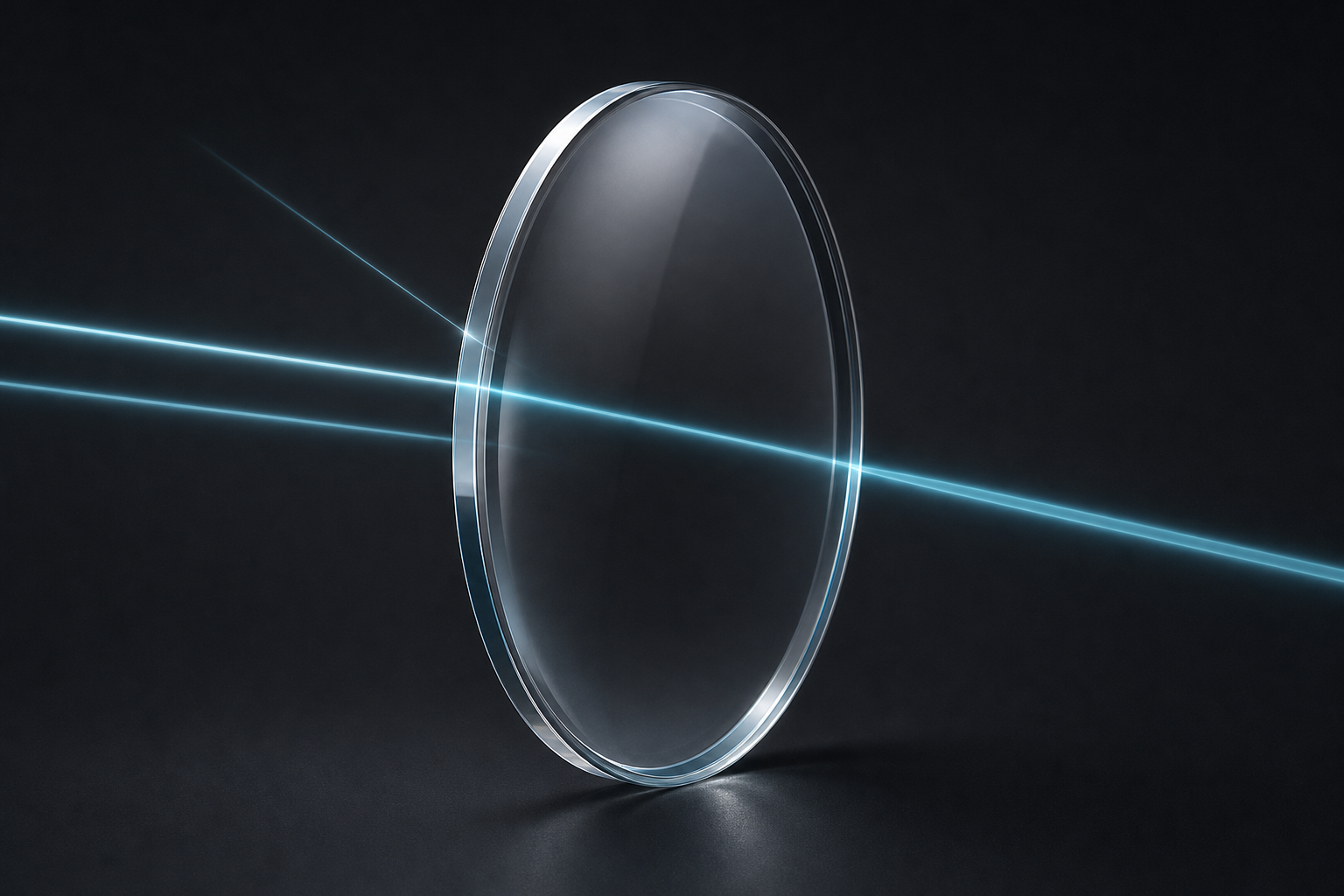
The technically precise term is anti-reflective coating. “Anti-glare” is a common consumer label, but it can refer to different lens features. An AR coating is applied to lens surfaces to reduce reflections there. ZEISS says its coatings reduce reflections from both the front and back surfaces and increase the amount of light transmitted through the lens to the eye. This is the basic optical distinction, not a claim that all glare disappears or that every coating performs identically. ZEISS describes its coating technology.
A useful way to separate lens features is to ask where the unwanted light comes from. AR coatings address reflections at the eyeglass lens. Polarized lenses, by contrast, filter reflected light from environmental surfaces such as wet roads or water, as ZEISS explains in its driving guidance. Tint changes the lens’s visible appearance and light transmission; it is not a measure of UV protection. ZEISS notes that lens tint does not indicate UV protection, which depends on the particular lens specification. A specialized back-surface UV-AR treatment is not the same as ordinary AR: ZEISS says its described configuration works only when the lens material already absorbs UV. Check the product’s UV details.
| Feature | What it does | What it does not automatically provide |
|---|---|---|
| Anti-reflective coating | Reduces reflections at lens surfaces | Polarization, tint, or UV protection |
| Polarization | Filters some reflected environmental light | Reduced reflections from the eyeglass lens surfaces |
| Tint | Changes lens color and visible-light transmission | UV protection based on darkness or color alone |
| UV protection | Provides UV protection according to the lens specification | Polarization or an anti-reflective coating |
Potential benefits—and what they depend on
When light reflects off a lens surface, it can create distracting reflections or ghost images. Reducing those reflections may make vision feel clearer in some lighting and viewing conditions. How noticeable that is depends on the lens, the coating, and the situation; an AR coating cannot remove glare caused by every source. It is best understood as a lens-surface feature, not a guaranteed improvement in visual comfort for everyone.
Less reflection on the front of a lens may also make the wearer’s eyes less obscured by visible reflections in some settings. This can be a practical appearance consideration, but the effect is not necessarily the same across lenses or lighting conditions. Some manufacturer coating packages combine AR layers with other technologies intended to improve resistance to scratches, dirt, or oil. For example, ZEISS describes those aims for its DuraVision Plus coating range. These are product-specific manufacturer statements, not evidence that every AR coating is scratch-proof, smudge-proof, or equally durable.
Evidence is insufficient to conclude that AR spectacle coatings reduce digital-eye-strain symptoms, so they should not be presented as a proven treatment. Read the review.
Night-driving claims depend on the lens feature. Evidence about yellow-tinted night-driving glasses should not be transferred to clear AR coatings. A coating may reduce reflections from the lens itself, but it should not be treated as a fix for persistent driving glare. See the discussion of night-driving glasses.
Limitations and common misconceptions
An anti-reflective coating can reduce reflections at a lens surface, but it does not correct an outdated prescription or address every source of glare and visual discomfort. The consumer label “anti-glare” can also be ambiguous: it does not tell you which lens features are included.
Anti-reflective coating, polarization, tint, and UV protection are different lens features. Verify each one separately.
An AR coating is not automatically polarized, tinted, or UV-protective. A lens’s color or darkness does not establish its level of UV protection, and an ordinary AR coating should not be treated as a substitute for specified UV protection. Ask what features the particular lens has rather than inferring them from its appearance.
The coating should not be viewed as a proven treatment for digital eye strain. A 2025/2026 review found the available evidence insufficient to determine whether AR spectacle coatings help manage these symptoms. It also discusses a small, short-term study of 28 participants that did not show clinically significant symptom reduction. Those findings do not settle every possible use, but they do not support promises that anti-glare glasses will reliably eliminate eye strain.
Nor should clear AR coatings be confused with yellow-tinted night-driving glasses. Evidence summarized on night-driving glasses found that yellow tints did not improve pedestrian detection or reduce the negative effect of simulated headlight glare. That result concerns tinted lenses in a simulated setting, not every clear AR coating or real-world driving, so it should not be transferred between lens types. The review of digital eye strain and lens-based prescribing and the discussion of night-driving glasses describe these evidence limits.
Care and resistance to smudges or scratches also vary by coating package. ZEISS says some of its coatings combine AR layers with technologies intended to improve scratch resistance and repel water or oil; that is a product-specific manufacturer statement, not proof that all coatings share those properties. ZEISS recommends lukewarm running water or approved spray and a microfiber cloth for its coated lenses. Follow the directions for your own lenses, since cleaning guidance and product compatibility are not universal. (ZEISS coating information; ZEISS cleaning guidance).
How to choose lenses for your needs
Start by identifying when and where the glare occurs. Reflections visible on the front or back of your glasses may be a situation to ask about anti-reflective coating. If light reflected from water or a wet road is the problem, ask whether polarized lenses are appropriate. ZEISS describes polarization as filtering reflections from light-reflecting surfaces; it addresses environmental reflected light, not the same lens-surface reflections targeted by AR coatings. ZEISS explains the distinction.
For bright outdoor conditions, ask about tint and UV protection as separate specifications. A darker or colored lens does not, by itself, show how much UV protection it provides. Confirm the UVA/UVB protection of the specific lens rather than assuming tint, polarization, or an AR coating guarantees it. ZEISS notes that a back-surface UV anti-reflective coating works only when the lens material already absorbs UV, so the precise product specification matters. Its UV guidance describes that configuration.
If glare comes with blur or visual discomfort, ask an optician or eye-care professional whether your prescription needs checking before selecting an added lens feature. A coating does not replace an accurate prescription, and no single feature addresses every cause of glare.
Before buying, ask which coating level and other features are included, whether they are compatible with your prescription and lens material, and what care or warranty terms apply. Product packages differ; claims about dirt or scratch resistance should be checked against the specific product rather than assumed for every AR coating. Also request care instructions for the exact lenses. Manufacturer guidance can be product-specific: for example, Essilor gives a cleaning routine for Crizal lenses, while ZEISS provides instructions for its own products. Follow the directions from your dispensing optician or lens maker, and confirm that any cleaner you plan to use is identified as compatible with your coating. (Essilor’s Crizal care FAQ; ZEISS cleaning guidance).
When to seek professional advice
A coating may reduce reflections from the lens, but persistent glare, blurred vision, headaches, or discomfort are reasons to consider an eye examination rather than relying on a coating alone. An eye-care professional can assess your concerns and discuss whether your prescription or lens features need review. This is especially relevant if your symptoms continue despite changing lighting or eyewear; do not assume the coating is the cause or the solution.
For a routine appointment, describe when the symptoms occur and whether they persist or change. Bring your current glasses, if possible, and ask whether your prescription or the lenses themselves should be checked before you choose another feature. This can help keep the discussion focused on your specific visual concerns without assuming that anti-reflective treatment is the answer.
Seek prompt professional guidance for a sudden change in vision or sudden blurriness. The American Academy of Ophthalmology advises prompt assessment for these changes, and says sudden vision loss should be checked immediately. A dark curtain or veil blocking vision is also listed among signs that call for an eye examination right away. These symptoms should not be managed by choosing anti-glare glasses or another lens feature on your own. See the AAO’s guidance on changes in vision and its signs that an eye exam is needed right away.
Conclusion
Anti-reflective coatings reduce reflections at the surfaces of lenses, which may make reflections or ghost images less noticeable. But anti-glare glasses are not a universal solution: a coating does not automatically provide polarization, tint, UV protection, or a more accurate prescription, and it cannot remove every source of glare. The right feature depends on what is causing the problem. Reflections from a lens surface call for a different consideration than reflected light from the environment, while tint and UV protection are separate properties to check. Before choosing lenses, note when and where glare occurs, then ask an optician or eye-care professional which features match your needs. Confirm the UVA/UVB specifications independently of lens color, and get care instructions for the specific lenses and coating. If glare or discomfort persists, seek an eye examination rather than relying on a coating alone.
Summary
Anti-reflective coatings reduce reflections from eyeglass lens surfaces, but they do not provide every feature associated with “anti-glare” glasses. Learn how AR coatings differ from polarization, tint, and UV protection, what their benefits depend on, and when to seek professional advice.