Round Face Shape Glasses: Best Frames for Added Definition

Introduction
Angular or structured frames are a common place to start when choosing glasses for a round face. Their straight edges can create contrast with softer facial contours, while a wider or more geometric design may offer a different look to explore. But face-shape labels are only rough styling guides, not rules about what you can wear. The right pair should also feel comfortable and suit your personal taste.
This guide to round face shape glasses covers silhouettes such as rectangular, square, and cat-eye frames, then looks at proportion and fit. As you compare options, consider both how a frame looks and how it sits on your face. A style that creates the effect you want is only a good choice if it feels secure and comfortable for the time you plan to wear it.
How to Recognize a Round Face Shape
Round faces are often described as having soft curves, a rounded jawline, and facial width and length that appear broadly similar. These are approximate visual cues, not measurements or a formal classification. An eyewear guide uses similar descriptions, but treat the cues as a starting point rather than an established standard (guide to choosing spectacle frames).
To explore whether this advice feels relevant, look at your face in a mirror or take a straight-on photo with your hair away from the sides of your face. Notice the overall outline and the jawline, rather than focusing on one feature. You may see a mix: for example, softer cheeks alongside a more defined chin or forehead. Faces do not always fit neatly into one category.
An eyewear stylist profile from the Association of Optometrists cautions against applying face-shape principles rigidly and emphasizes individual differences and personal preference (AOP). So use a label only if it helps you decide which frames to try. You do not need to settle on a definitive shape before choosing glasses, and the label alone cannot tell you whether a particular pair will look or feel right.
Frame Shapes That Can Add Definition
If you want contrast with softer contours, start by comparing frames with angular lines.
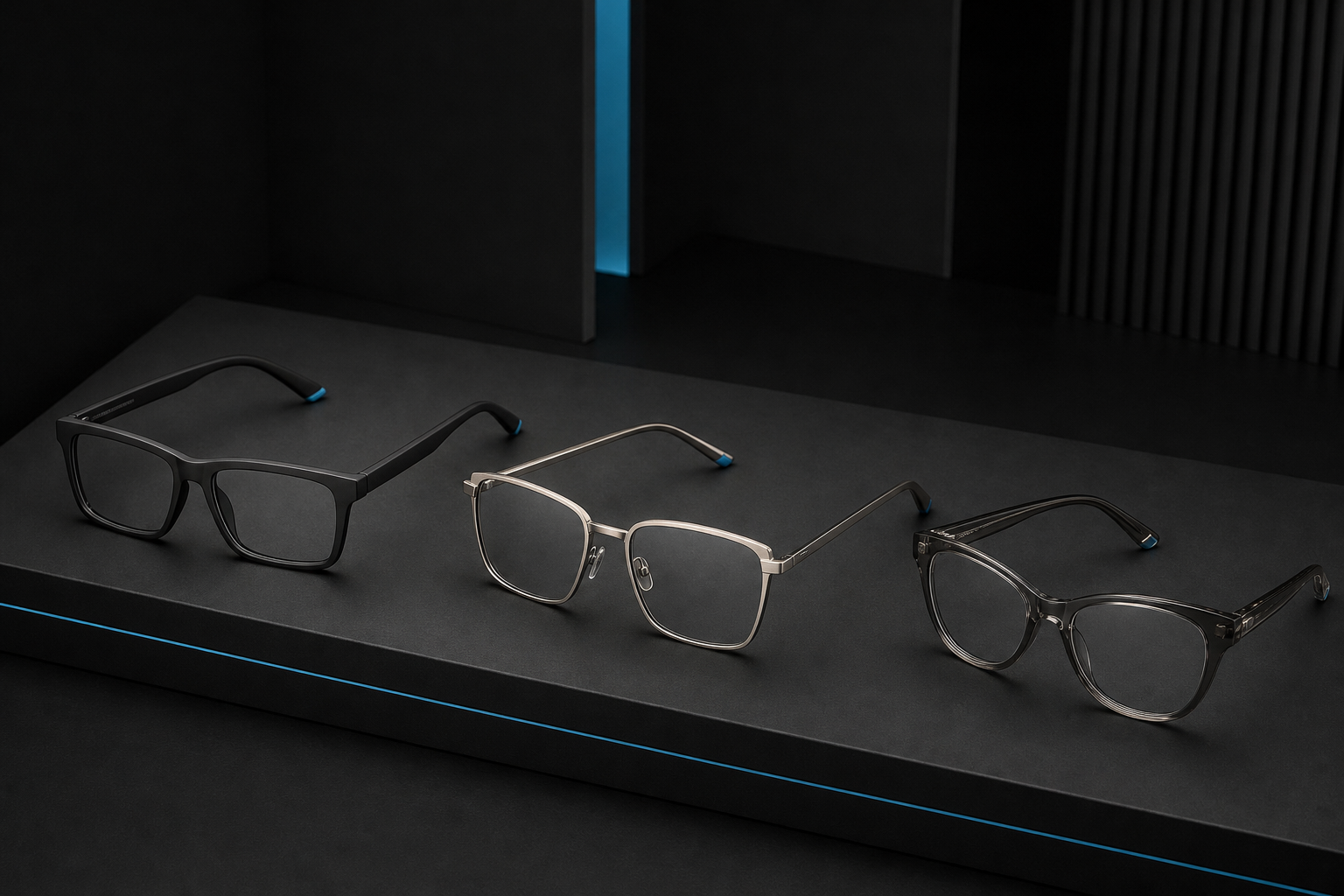
Rectangular or square styles are commonly suggested options for round faces. The Association of British Dispensing Opticians gives rectangular frames as an example and says they may create the visual impression of a longer face; this is a styling effect, not a physical change or a guaranteed result (ABDO). ZEISS also lists square or slightly rectangular frames among options to consider, while noting that frame width can matter too (ZEISS).
Other silhouettes can provide different kinds of structure. Browline frames draw attention to the upper edge, while cat-eye frames angle upward at the outer corners. Geometric frames offer another angular alternative. Optometrists.org lists rectangular, geometric, cat-eye, and D-frame designs as options to try, not universal guidance (frame-style guide). Try several shapes and judge the result on your own features.
| Frame shape | Effect to explore | Consider when trying it |
|---|---|---|
| Rectangular or square | Angular contrast; a longer-looking impression may appeal to you | Compare the width and scale against your face |
| Browline | A more defined-looking upper edge | Check that the top line feels balanced with your features |
| Cat-eye | An upward angle at the outer corners | See whether the lift and scale suit your preference |
| Geometric | A more angular alternative | Try different outlines rather than relying on the label |
Face-shape suggestions are starting points for trying frames, not rules about what someone can or cannot wear.
Round or oval frames are not automatically off-limits. They may offer less angular contrast, but personal preference and the proportions of a specific frame matter. The AOP profile emphasizes individual differences and cautions against rigid face-shape rules. Treat any description of added definition, lift, or length as a visual possibility to test, not a promise that a style will flatter everyone.
Check Frame Proportions and Fit
A frame can create the look you want and still feel wrong if its proportions do not suit your face. For round face shape glasses, treat silhouette as one part of the decision: width, bridge position, temple fit, lens height, and weight also affect how the frames look and feel during the day.
Frame width affects how the glasses sit across your face. Check that the frame does not look or feel unusually narrow, or extend awkwardly beyond your temples. The right balance is individual, so use your own appearance and comfort rather than a numerical rule.
Bridge fit helps determine whether the frame stays in position. Notice whether the glasses rest securely on your nose without pinching or repeatedly sliding down. Temple fit matters too: the sides should feel secure without pressing uncomfortably against your head. If the frame feels tight, loose, or unstable, a different size or adjustment may help.
Lens height and frame weight are worth considering alongside width. A taller or heavier frame may feel different from a lighter, lower-profile pair, especially if you expect to wear your glasses for long periods. Think about the activities you will use them for, not only how they look in a mirror.
The Association of Optometrists’ profile of an eyewear stylist describes considering details such as head and nose size, bridge fit, frame weight, intended use, and wearing time when making recommendations. That is an individual stylist’s approach, not a universal fitting protocol, but it reinforces a useful distinction: visual styling and comfortable fit are separate checks.
If you have a pair that already feels comfortable, compare its general scale and how it rests on your face with the new frames. Still assess each pair on its own. Persistent slipping, pressure, or uncertainty about prescription-related fit is a good reason to ask an optician for help.
Consider Color, Material, and Personal Style
Once a frame shape and fit feel promising, consider how its color, finish, and material suit your everyday style. These details can shift the impression a frame gives: a strong color or prominent finish may feel more noticeable, while a more understated choice may blend easily with outfits you wear often. Think of that as a personal styling preference, not a rule about which colors belong with a particular face shape.
Your usual wardrobe can be a helpful reference. If you tend to wear neutral colors, you might prefer frames that coordinate easily, or choose one distinctive detail as an accent. If your clothes and accessories already make a statement, a simpler frame may feel more natural. Either choice can work if you enjoy wearing it.
Material is another practical consideration. Pay attention to how the frames feel in your hands and on your face, including their weight and whether you are comfortable wearing them for the time you expect. Consider intended use as well: everyday glasses may need to suit a range of settings, while a pair for occasional wear can be chosen around a more specific look.
There is no need to let a face-shape label decide the color, finish, or material for you. Compare a few options with the silhouette and fit you like, then choose the pair that feels like your style.
A Simple Try-On Checklist
Use this checklist in-store, or as a guide when comparing frames online:
- Try more than one silhouette. Compare angular or structured options with other shapes you like. Face-shape advice can suggest styles to explore, but it cannot determine which pair you will prefer.
- Check the width and overall scale. Look at how the frame sits across your face and whether it extends awkwardly or feels too narrow. Compare it with a pair you already find comfortable, but assess the new frame independently.
- Notice bridge stability. The glasses should feel secure without pinching or slipping. The Association of Optometrists’ profile of an eyewear stylist includes bridge fit among the details that may inform recommendations, alongside factors such as head size, frame weight, and intended use.
- Move as you normally would. Turn your head and look down and up. Notice whether the frames shift, press against your temples, or feel uncomfortable. Consider how they feel for the amount of time you expect to wear them, rather than judging only from a quick mirror check.
- Check the details before ordering online. Review the seller’s sizing information and return policy directly. If measurements are unclear, ask the seller or an optician before buying.
If the fit remains uncertain, you have a complex prescription, or pressure and slipping persist, seek professional help rather than relying on face-shape guidance alone.
Conclusion
Angular, geometric, or otherwise structured frames can be worth trying if you want to add contrast to a round face, but they are options, not requirements. The frame that looks appealing still needs to feel comfortable and sit securely.
Compare several silhouettes, then consider width, bridge stability, weight, and how the frames suit your personal style and intended use. Face-shape categories are approximate styling guides, so there is no need to rule out a shape you enjoy. If glasses keep slipping, feel uncomfortable, or involve a prescription-fit question, ask an optician to help you find a secure fit.
As you compare, focus on pairs you would happily wear day to day, not only those that create the strongest contrast in a mirror. An optician can help resolve fit questions before you decide.
Summary
Compare rectangular, square, browline, cat-eye, and geometric frames that may add contrast to softer facial contours. Learn how to assess proportions, bridge and temple fit, comfort, color, and personal style while treating face-shape labels as flexible styling cues.